
After Closing: Turn Your Home Inspection Report Into a Maintenance Plan
Your inspection report can remain useful after closing. Learn how Smyrna homeowners can organize findings, prioritize follow-up, and build a practical maintenance plan.
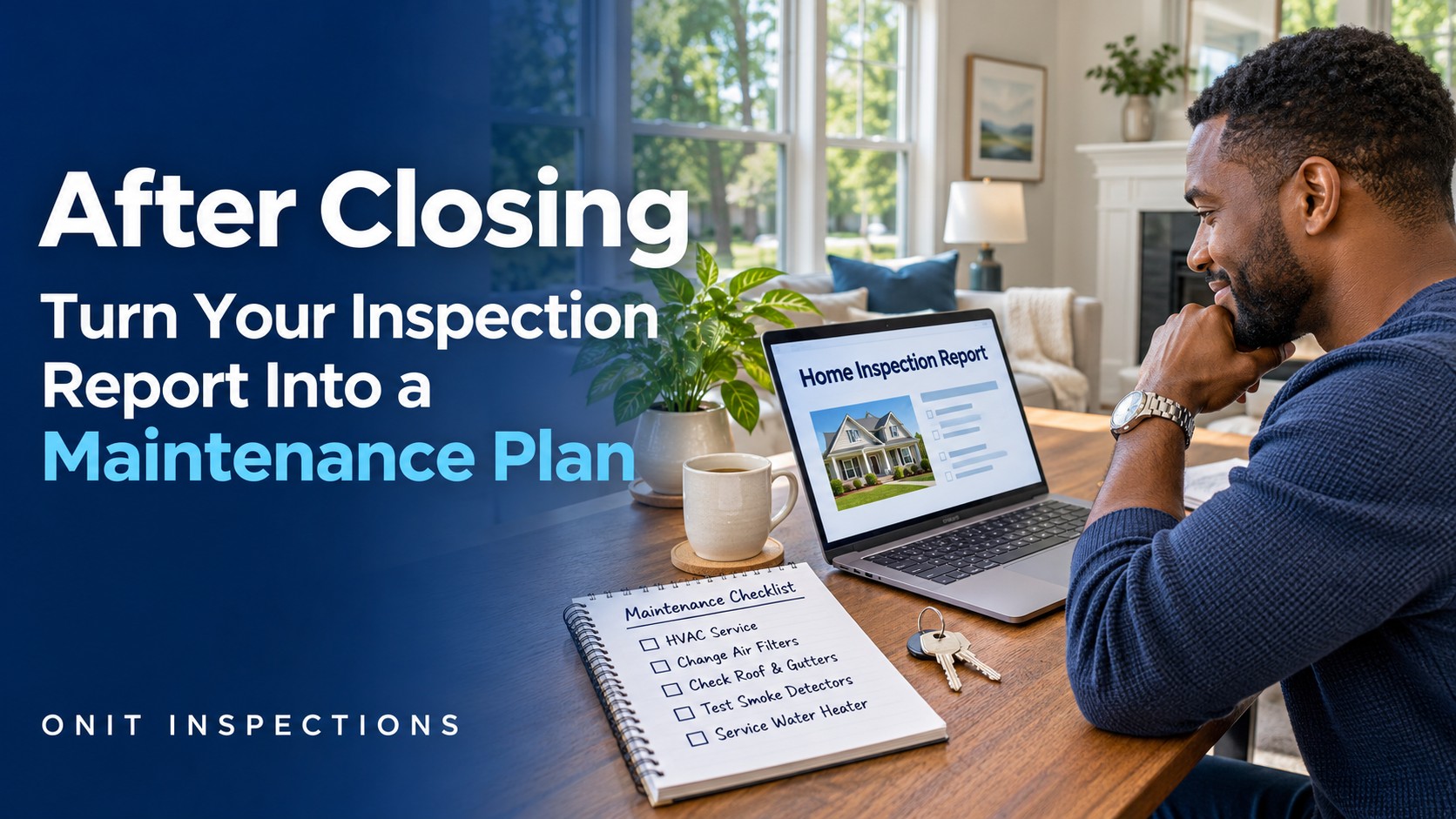
You've closed on your Smyrna home, picked up the keys, and started unpacking. Your home inspection report may already be tucked away with the rest of your closing documents.
Before you put it aside, give it another look.
The report can help you organize repairs, plan maintenance, and remember questions that deserve follow-up. For new homeowners in Smyrna, GA, it's a useful starting point for learning about the property beyond move-in day.
Here's how to turn that information into a practical plan.
Read the Full Report Again
During the buying process, you may have focused on findings that could affect your purchase decision. After closing, your priorities change.
Read the complete report, including the photographs, maintenance observations, and explanations of areas the inspector couldn't access.
You may notice items that weren't central to negotiations but still deserve a place on your homeowner checklist.
Keep the report easy to find. Save a digital copy in a folder with your closing documents, warranties, and repair records.
Separate Questions From Action Items
Not every report finding gives you a ready-made repair plan. Some items may recommend further evaluation before anyone can determine the appropriate work.
Create two lists:
- Questions to clarify: Findings you don't understand or recommendations that need more explanation.
- Actions to arrange: Evaluations, repairs, or maintenance with a clear next step.
For example, "Contact a qualified contractor to evaluate the finding" is different from "Replace the component." Avoid assuming a replacement is necessary before the recommended evaluation takes place.
If the wording is unclear, ask your inspector to explain what was observed and why follow-up was recommended.
Prioritize With Professional Guidance
A long list can feel overwhelming, especially when you've just moved.
Start with findings identified as safety concerns, active problems, or items needing prompt evaluation. Ask the appropriate qualified professional about urgency, repair options, and scheduling.
Then organize routine maintenance and longer-term improvements around those priorities.
Cosmetic projects can be exciting, but they shouldn't distract from unresolved concerns that need attention. A fresh paint color can wait while you clarify a more important finding.
Confirm What Was Already Addressed
Some issues may have been repaired before closing. Others may have been covered by a credit rather than completed work.
Review the available documentation so you know which items still need action. Keep receipts, contractor descriptions, warranties, and any follow-up evaluation records together.
A note that says "seller handled it" may not tell you what was done. Where documentation is available, record the actual work and who completed it.
If you're unsure whether a concern was resolved, discuss the next step with an appropriate professional.
Build a Simple Maintenance Tracker
Your plan doesn't need complicated software. A notebook or spreadsheet can work well.
For each item, record:
- Location: Where the finding was observed.
- Report reference: The section or photograph that explains it.
- Next step: Whom to contact or what needs clarification.
- Priority: Based on the report and professional advice.
- Status: Not started, scheduled, or completed.
- Completion record: Date, invoice, and relevant photos.
For example, an entry might read: Guest bathroom - dripping faucet noted in report - arrange plumbing evaluation - appointment scheduled.
The goal is to make the next action easy to understand.
Plan Recurring Tasks Around Your Home
Some maintenance tasks repeat. Use manufacturer instructions and recommendations from the professionals who service your home to establish an appropriate schedule.
You might create reminders for equipment servicing, filter checks, or other recurring tasks relevant to your property.
A Smyrna home with a crawl space may have different maintenance needs from a nearby condominium. Even homes on the same street can have different equipment, materials, and repair histories.
Build your schedule around your actual home rather than copying a generic checklist without reviewing it.
Keep a Record of Changes
As work is completed, update your tracker and save the supporting documents.
Include before-and-after photographs when useful, along with the contractor's name, service date, and description of the work.
These records can help you explain past repairs during future service appointments. They can also make it easier to answer questions if you eventually decide to sell.
An organized record is more useful than trying to reconstruct years of maintenance from memory.
Remember That the Report Reflects Inspection Day
Your inspection report documents observations made at a particular time, within the agreed scope and access available.
It isn't a prediction of every future problem or a guarantee that unreported issues won't develop.
If you notice a new leak, an equipment problem, or another change after moving in, arrange appropriate evaluation. Don't assume an earlier inspection rules out a current concern.
Likewise, avoid treating a report finding as unchanged years later without considering subsequent repairs or changes to the property.
Start Homeownership With a Clearer Plan
You don't have to complete every maintenance project in your first week. You do need a clear understanding of what requires attention and what your next steps should be.
Revisit the report, clarify questions, arrange recommended evaluations, and track the work as it happens. Those small organizational steps can make caring for your home feel more manageable.
Onit Inspections helps buyers, sellers, and homeowners in Smyrna and throughout metro Atlanta understand their properties through detailed inspection reports.
Planning a home purchase or have questions about inspection services? Visit onitinspections.net or call (404) 239-2240.
Have questions about a property?
Book an InspectionKEEP READING
Related Articles

Thanksgiving at Home: What Hosting Can Reveal About Your Smyrna Property
Thanksgiving hosting can bring overlooked home concerns to your attention. Learn what Smyrna homeowners can notice, document, and follow up on after the holiday.
Read article
How to Prepare for a Home Inspection | Onit Inspections
Home inspection booked? Learn how to prepare, ask useful questions, and review your report with Onit Inspections in Smyrna and metro Atlanta.
Read article
Which Home Inspection Do You Need? A Guide for Smyrna Homeowners
Buying, selling, or building in Smyrna? Explore Onit’s home, pre-listing, radon, mold, and pre-drywall inspection services across metro Atlanta.
Read articleReady to Schedule Your Inspection?
Book online through our scheduler or give us a call.